
Why Representation in Cycling Matters: An Interview with the Inimitable Ayesha McGowan
Cycle the Hudson Valley—Parks & Trail New York’s fully-supported eight-day bike tour between the Capital Region and NYC—is proud to welcome the inimitable Ayesha McGowan to our 2024 ride!
Ayesha, an icon and the first African-American woman pro road cyclist, is an advocate dedicated to encouraging and inspiring other women of color to follow their dreams, whatever they may be. Through various initiatives that focus on representation like her ‘Do Better Together’ virtual ride series, Thee Abundance Project Programs, and now a Cat 3 Composite Racing Team—Rising Force—Ayesha has inspired countless people to ride more, ride together, and to challenge themselves and their views of how they define the word “cyclist.”
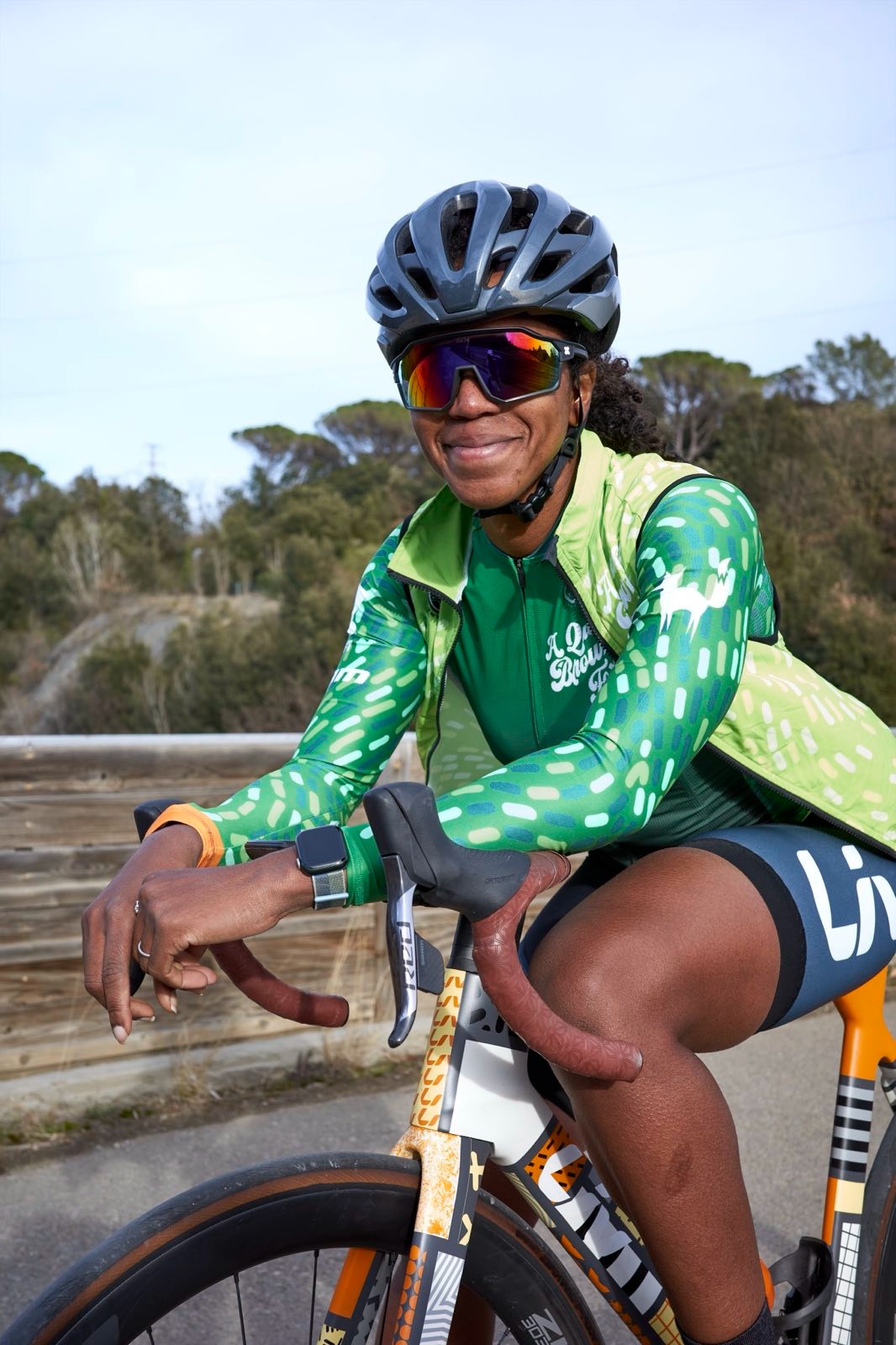
PTNY’s Senior Director of Development, Communications, & Marketing—Linden Horvath—had the unmitigated pleasure of sitting down with Ayesha to discuss all things cycling, exciting things coming down the trail this summer, and why representation is critical.
LINDEN: OK, so I guess the first question I'd like to ask is, what sparked your love of cycling? Did you feel welcomed into cycling spaces?
AYESHA: The love of cycling was pretty instantaneous. I started as a commuter in college and it was just a way for me to get to class faster. And that was a raving success, but somehow along the way I found more joy in cycling and I luckily entered spaces that were welcoming from the beginning. I just happened to find the right spaces… and I don't think that's the case for everybody. I think that's a big part of why I think it's so important. I had such a great introduction in to the cycling community, and I guess I saw what it could be when done how I think is correctly.
The first truly true cycling space I entered was Bikes Not Bombs in Jamaica Plain, MA. It was at my local bike shop, the group of people was super diverse. It was all kinds of folks. And they taught us not just how to build bikes, but also how to interact with people.
We went through all of the “isms” and it was very much like, “this is the space that we're trying to create.” And we knew exactly what we were in for. And if we didn't like it, then you didn't have to be there. And I thought that was fantastic. At no point did I feel like I wasn't welcome or that anybody else wasn't welcome. And so that was fantastic.
LINDEN: So what other benefits have you experienced from cycling?
AYESHA: It very likely changed the whole trajectory of my life.
I was in school for music and did follow that path for a while, but then bikes became even more consuming than they already were… and somehow now I'm running my own company that's focused on creating better representation for people of color, and creating opportunities for women of color to race bikes. I can tell you how we got here, but I still don't believe it myself.
Bikes have expanded my world. They've taken me so many places. I've met so many wonderful people and learned so much about life and myself and everything.
LINDEN: Historically (and in the present) access to cycling, parks, greenway trails, it’s not necessarily equal. Why do you think it's important that activities like cycling, and access to public green spaces, are open to a wider community?
AYESHA: I think a lot of folks don't necessarily see themselves in certain spaces, and they don't feel like those are the spaces for them because of that. I think making deliberate efforts to create those spaces—and let people know that they're welcome—makes a world of difference.
It's not just beneficial to the communities that are not necessarily being included, but it's beneficial to the typical people that are generally given those opportunities, or are already welcomed into those spaces, because it expands everybody's horizons.
I think it's just super necessary because the world is big and small all at the same time, and bikes can touch so many different kinds of people because practically anybody can ride a bike.
There are so many different kinds of bikes, and they're in so many different kinds of places, and they reach so many different kinds of people. I think making sure that you create an environment that is open and welcome to all is super important so you're not creating a bubble.
LINDEN: Do you think that we're making progress on these initiatives to honestly and truly create and open up more welcoming spaces?
AYESHA: There was definitely a boom during the pandemic. People felt more encouraged and inspired to create these spaces and invest in these spaces. And I think there has been some movement and some progress. But I think, at this point in time, we're actually regressing quite a bit. I think people are becoming more complacent, they're falling back into old patterns, and they're reprioritizing the things that they were doing before. And so that's really upsetting and unfortunate in my opinion, because there were lots of really magical things that were happening, necessary things that were happening.
LINDEN: So I know that you are a very busy person and hold down a lot. I'd love to hear a little bit more about the initiatives, the projects, the organizations that you’ve formed or are participating in to address some of these challenges. Or projects to create a more abundant, more welcoming, more equally-owned space in cycling and sports in general.
AYESHA: So I run A Quick Brown Fox, which started as a documentary project to follow the story of me trying to become a professional cyclist, which I successfully did.
And now it has been converted into more of a project to create space for other people to follow their dreams and belong in these spaces too. Within A Quick Brown Fox, we have The Black Foxes, which is a collective of eight Black people. Most of us live in America, but a few of us live in Spain. So it's an international collective. And we are cyclists and outdoors people, which is really exciting. We’re really focused on creating the narrative that we would like to see around Black people in cycling and in the outdoors.
I also run Thee Abundance Project, and that was created as a pathway from beginner to pro for women of color who are interested in road racing, which is my thing. And that's been going really well. We started with nine women in 2021, and last year we supported about 63 women.
LINDEN: With all you're doing, thank you so much for taking the time to chat with us. Part of the reason we're having this conversation is we are incredibly lucky to welcome you to our upcoming bike tour, Cycle the Hudson Valley. I'm just curious if you could say a little bit about what led you to agree to participating in the ride with PTNY?
AYESHA: When I first got into the cycling community, I did a lot of similar events, maybe not super multi-day things like this, which is a pretty cool endeavor, but a lot of Fondo-type, group-style riding events, and I had so much fun and learned so much and met so many amazing people.
And the Hudson Valley is actually quite beautiful. So I'm excited to see some of the trail and sights and create space within a space for people of color to come and experience that too. So, yeah. Fantastic.
LINDEN: We are very excited to have you join us! Why is it important to ensure that there's honest representation and open, welcoming space for minoritized communities to participate in events like these that could historically be very white?
AYESHA: I think these types of events can be entry points for a lot of people. Like maybe they have interest in something tangential and they decide, oh, this could be a fun thing that I want to do. But part of it just doesn't seem super welcoming. I think it's important to make sure that the spaces that are being created make people feel invited… so that if they have that spark and they have that desire that they don't not come because they just don't feel like they'll be welcome there.
And I think those are the kind of people that also help make the community a better place as a whole. Because, you know, I jumped in and now look at me.
I think it's really important to make sure that those entry points into cycling spaces and outdoor spaces are as welcoming as possible.
LINDEN: Thank you for helping us build that kind of space... We are very appreciative. Are there any specific parts of your participation with Cycle the Hudson Valley that you're especially looking forward to?
AYESHA: I'm actually just really looking forward to the entire experience, I think: meeting new people; riding with groups; experiencing new places. I'm really looking forward to taking the ride and enjoying myself.
LINDEN: Is there anything other than Cycle the Hudson Valley that you're looking forward to for the spring and summer? Any initiatives or races you're working on that are especially exciting?
AYESHA: Every year, Thee Abundance Project does the “Tour of America's Dairyland,” so I'm really looking forward to that. I usually have to skip out on part of it because of nationals, but since they moved the dates, and since I'm not racing nationals this year because I'm taking a break, I get to really fully experience the Tour of America's Dairyland, which I'm really excited about.
Ayesha McGowan will be joining Cycle the Hudson Valley for the last days of the tour, presenting and leading a discussion in the evening, and then heading a plenary tour from Rockland County down into NYC and back.
To get your tickets for Cycle the Hudson Valley visit our registration page here, and to learn more about/support Thee Abundance Project, please visit Ayesha’s site here.