
Six Improved NY Trails and Pathways

What could be better for a trail user than encountering a newly restored pathway?
The fresh, leveled, compacted surface. The intentional placement of stones and boulders to assist with slopes. The clever ways to mitigate erosion. Fewer ruts, roots, divots and less mud, allowing a trekker to enjoy the hike without constant eyes on the trail to prevent a twisted ankle.
Since 2015, our Park and Trail Partnership Grants (PTPG) have funded 167 projects—many supporting the construction, restoration, and/or enhancement of numerous miles of trail—across the state. Here are six recently completed projects that have used PTPG funds to give a much-needed "facelift" to some of our favorite trails and pathways.
REVOLUTIONARY WAR HISTORIC TRAILS
Fort Montgomery State Historic Site, Ft. Montgomery
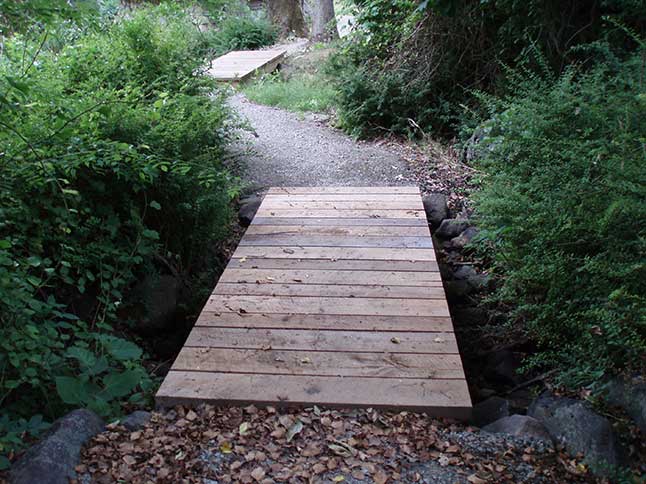
Increased interpretation opportunities and safer, more accessible trails for visitors are the results of a $33,300 award to the Fort Montgomery Battle Site Association. Nearly 2,000 feet of pathways have been resurfaced at this Revolutionary War-era historic site along the Hudson River, allowing better access for school groups of all ages and visitors with mobility challenges. The Western Redoubt Trail, Twin Forts Trail, Round Hill Redoubt, and even the Fort entrance all received key improvements to their surfaces, as well as erosion mitigation efforts through new infrastructure for drainage and water diversion swales. These improvements, in addition to the construction of two new wooden bridges, provide an essential connection between the eastern and western portions of the Fort, opening up new areas for group and self-guided tours.
THE BOULEVARD
Boutwell Hill State Forest, Chautauqua County
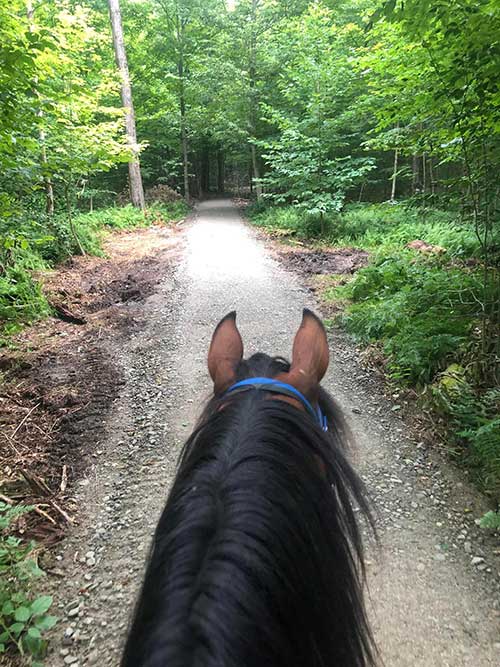
The “Reconnect the Boulevard Project” at Boutwell Hill State Forest, just north of Jamestown, involved rehabilitation of a 1-mile section of trail. For years, this multi-use trail had been inaccessible to users due to logging. Now, thanks to the efforts of the Chautauqua County Equestrian Trail System, Inc. and funding through PTPG, more than 6,100 feet of trail are open to hikers, runners, cyclists, equestrians, snowmobilers, and x-country skiers. In addition to coordinating the project, this western New York based nonprofit raised $7,500 in matching funds for the $64,800 awarded in 2021. According to their final report, “Rehabilitation of the Boulevard was performed in an environmentally friendly, sustainable way using best practices recommended by the DEC and Trail Stewardship Training protecting the forest ecosystem and allowing safe usage for trail users.”
The intensive project involved inserting culvert pipes and swales to accommodate standing water in swampy, boggy sections of the former logging path. Other sections received a generous 4-inch depth of screened gravel, oversized stone, and fabric to accommodate feet, wheels, skis, and hooves to create a truly "multi-use" trail.
LITTLE STONY POINT OVERLOOK TRAIL
Hudson Highlands State Park Preserve, Cold Spring
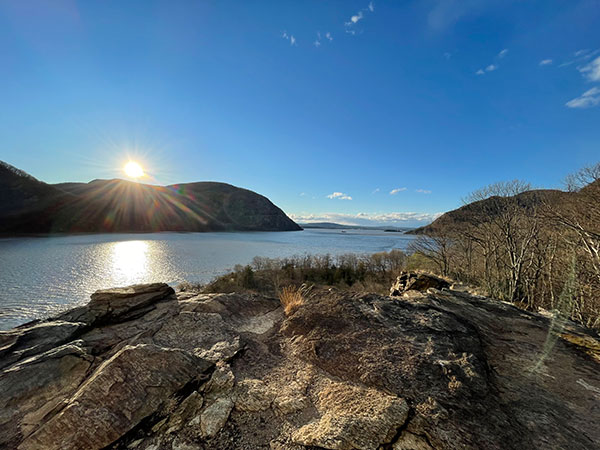
One of the most stunning vistas in the Hudson Valley is now more accessible thanks to the hard work and dedication of the Little Stony Point Citizens Association (LSPCA). The short hiking trail, beginning just after visitors cross a footbridge over railroad tracks, is modest in length but big on impact. Belied by its size, this tiny-but-mighty trail provides one of the best vistas of the gorgeous and iconic Hudson River. A $13,500 award provided much-needed assistance to improve the surface of the narrow, winding, wooded trail. Changes in sloped sections were addressed for better footing, making the trail more accessible for visitors of varying abilities. According to the LSPCA, “Not only will sought-after views become more accessible to a wider range of visitors, but staff and volunteers will also have more success safely leading hikes, programs, and events that could utilize this compelling resource to inspire a connection to the area.” This trail is a highly recommended alternative to some of the park’s more heavily trafficked (and more challenging) trails such as Breakneck Ridge.
RANGER TRAIL
Poke-O-Moonshine Mountain; Taylor Pond Wild Forest; Chesterfield, NY
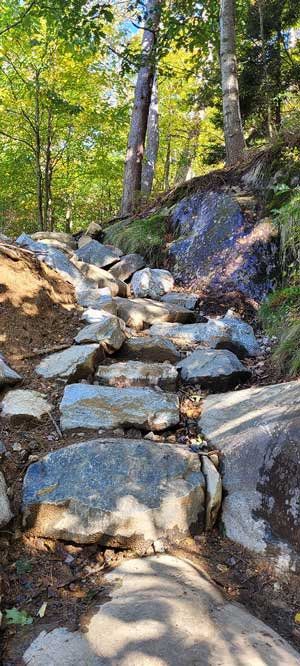
Out of the thirty projects awarded during the sixth round of the Park and Trail Partnership grants, the “Take it to the Top” trail project wins the award for most intensive and demanding. The seven week, $30,000 rehabilitation project focused on a challenging section of trail near the summit of Poke-O-Moonshine Mountain (located on the eastern edge of the Adirondacks in the Taylor Pond Wild Forest). Thanks to PTPG funding, partners from Friends of Poke-O-Moonshine, Adirondack Architectural Heritage, the Department of Environmental Conservation, Adirondack Mountain Club, and the Student Conservation Association (SCA) were able to complete this complicated-yet-vital years long project.
Sustainable rehab work on this Adirondack trail started back in 2013. Building on previous projects, PTPG funds allowed mitigation of severe erosion and instability on this trail section by professional crews, who built a 60-step rock staircase using stone sourced from a local quarry and flown to the summit. According to the grant final report, “Due to the nature of the area and the location of the imported stone, two highline systems were built to transport stone safely and efficiently from the drop zone to the project sites.” In addition to this effort, the SCA built a re-route of the trail that was highly needed due to extensive braiding—a term to describe networks of smaller trails created by users to get around obstacles and unstable sections. Waterbars, drainages, a retaining wall, and other trail construction techniques were initiated to prevent erosion and ensure the sustainability of the updated trail section for decades.
OVERLOOK TRAIL
Rockefeller State Park Preserve, Westchester County
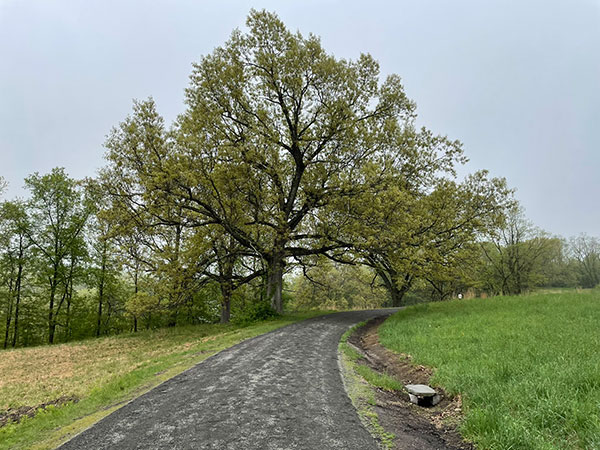
One thing is certain: a well-maintained trail system is essential for a state park that welcomes over 500,000 visitors each year. Whether it be school groups, scouts, birders, or equestrians, this 1,700+ acre property—once part of the country estates of the John D. Rockefeller family—is well-loved and well-used. The Overlook Trail, among 45 total miles of carriage roads, is one of the most-trafficked trails in the park. Prior to PTPG funding, The Overlook Trail was in dire need of attention. The trail's proximity to the tranquil Swan Lake means it is not only popular for visitors, but quite important for the health of the lake itself Proximity to Swan Lake made runoff from the gravel carriageway a threat to the lake’s ecosystem and turbidity. A $60,000 award to the Friends of Rockefeller State Park Preserve resulted in re-surfacing, crowning, drainage enhancements, and proper diversion to allow for safer passage for trail users... and mitigation of runoff into the body of water below.
In addition to the usual trail improvements performed, the carriage road project also involved re-seeding trail-side grasses and greenery to add further runoff mitigation, and add to the beauty of the park. According to the Friends of Rockefeller State Park Preserve, “The beauty of the carriage roads are their width, smooth, compacted surface and sure footedness. Conditions that make them accessible for all. The 12' width and 2' of shoulder on each side allow visitors to experience nature without worrying about ticks.”
BLACK CREEK ACCESSIBLE PATHWAY
Rochester

Rochester Community Inclusive Rowing (RICR) has been making significant strides to increase accessibility along the section of Black Creek that empties into the Genesee River. This section of creek, south of the City of Rochester, is an ideal and safe section of waterway for recreation... especially kayaking. RICR—whose mission is to create a supportive, inclusive, and fully accessible environment for veterans and people with any challenge who want to come to the water and learn to row, at no cost to them—has been committed to building out access for this section of waterway.
In 2020 this small-but-might nonprofit group received funding from a Park and Trail Partnership Grant to install a floating, universally accessible sculling dock. They successfully completed the dock project, then applied for (and were awarded) an additional $11,500 grant to build out safe, easy access to the dock from the boathouse, where kayaks are stored. RICR quickly and successfully completed their planned ADA-compliant pathway increasing access to the waterfront for those with different abilities. The group also prioritized sustainability by using green-friendly, porous materials to allow wheelchairs and people with ambulatory challenges to access the boathouse and DEC lands while prioritizing permeable surfaces for environmental impact. PTNY was happy to celebrate this accomplishment in 2022, attending a special ribbon cutting to acknowledge the completion of both projects and the creation of greater accessibility to water-based recreation for all in the area.