
Starry, Starry Night
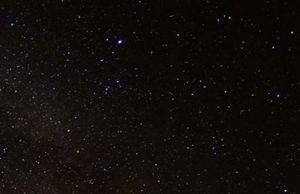
Bundling up and heading out into the cold on a dark, wintry night to stargaze isn’t everyone's cup of tea. However, colder temperatures often mean fewer clouds, less humidity, and generally crisper air that provides a clearer view of celestial wonders. Plus, longer winter nights enable stargazing at much earlier hours. So take advantage of great winter stargazing conditions and head outdoors to view some of the most awe-inspiring wonders of nature.
WHERE TO VIEW
As cities and suburbs continue to encroach into rural areas, light pollution is a growing issue. Although some of the brighter constellations and visible planets may be visible in more populated areas, amateur astronomers will be shocked at the difference a trip to an area with less light pollution will provide.
The light pollution map at DarkSiteFinder will show you New York’s brightest and darkest areas. The blue areas are ideal but if you can't get away to one of these darker areas, you can still enjoy several fascinating night sky features, which we've highlighted below. Try to select a night when the moon is new or just barely visible. A bright moon will shed enough light to make it more difficult to see some of the dimmer objects.
WHAT TO VIEW
It can be very humbling to look up at the sky and realize the immensity of the constellations and planets. You might view the constellations and ponder the ancient cultures that named them from the patterns and pictures they saw. Or you might view the bright dot of Venus and imagine the raging storms blowing across its oven-hot surface.
If they know where to look, you can spot a few very interesting objects among that myriad of stars and planets above.
THE MOST DISTANT OBJECT ONE CAN SEE WITH THE UNAIDED EYE
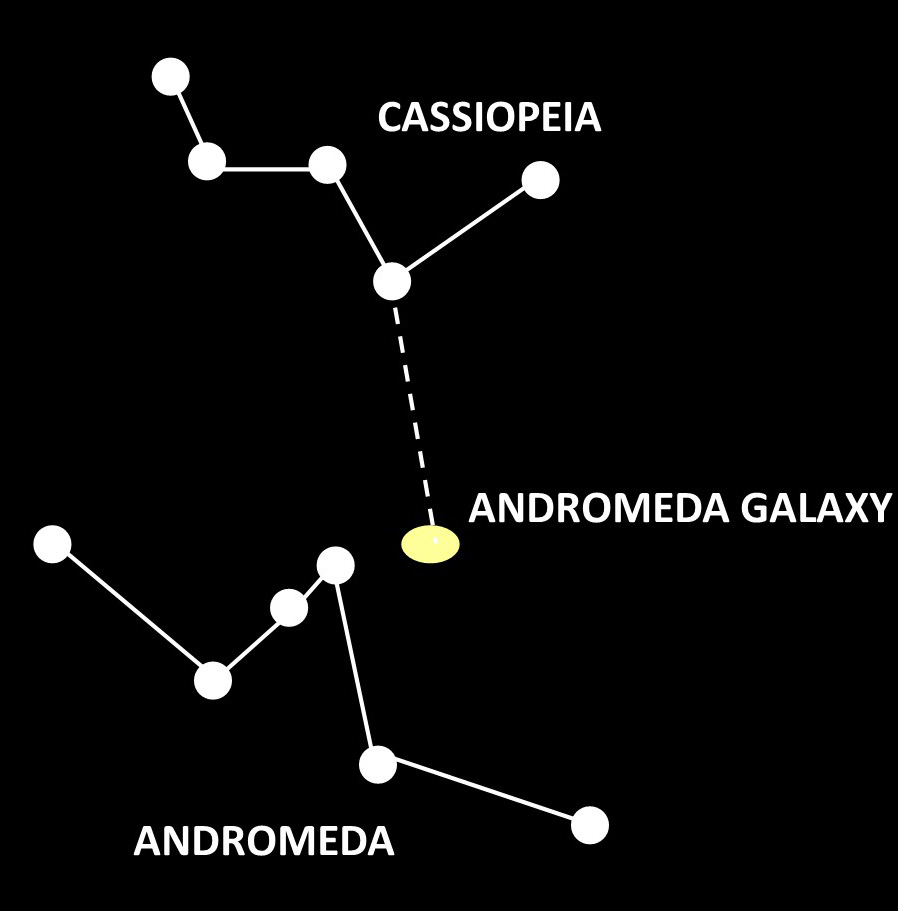
If you’re in a very low-light area, have decent vision, and know precisely where to look, you will see a small, faint, off-white glowing orb which, next to its celestial neighbors, seems rather unassuming. However, if you stop and really think about what you're looking at, that hazy glow (which can be located by the pointing stars of the constellation Casseopeia) is one of the most mind-blowing features you can see without a telescope. That modest orb is the Andromeda Galaxy, a massive system containing literally billions of stars! Exactly how big is it? This galaxy, our Milky Way's closest neighbor, has a radius of 110,000 light-years. One light-year is the equivalent of 5.8 trillion miles. Do the math to determine just how immense that tiny blob is. And just as fascinating, it is so far away that the light that is entering your eyes took 2.5 million years to arrive!
THE CENTER OF OUR GALAXY
Many people have difficultly conceptualizing just what they’re seeing when they look up and see the Milky Way, that wispy, almost cloud-like feature spanning the night sky. It may be difficult to view in populated areas, but when you’re out in blue and green areas featured in the DarkSiteFinder Map, our home galaxy, is very prominent. But what exactly are we looking at? And why does our galaxy appear different from others that we can see in the night sky?
First, consider where our solar system is located in the Milky Way. Our cozy, modestly-sized seven billion-mile-wide solar system revolves around the center of the Milky Way on the edge of one of its many spiraling arms. That band of faint light you’re looking at is the center of our galaxy. Taking into account all of the other stars, constellations, and planets that speckle the rest of the sky, think of them as raindrops on a windshield and the Milky Way being a sign approaching on the road ahead. That “approaching sign” is a cluster of billions of stars spanning over 100,000 light years from end to end.
A DOUBLE STAR
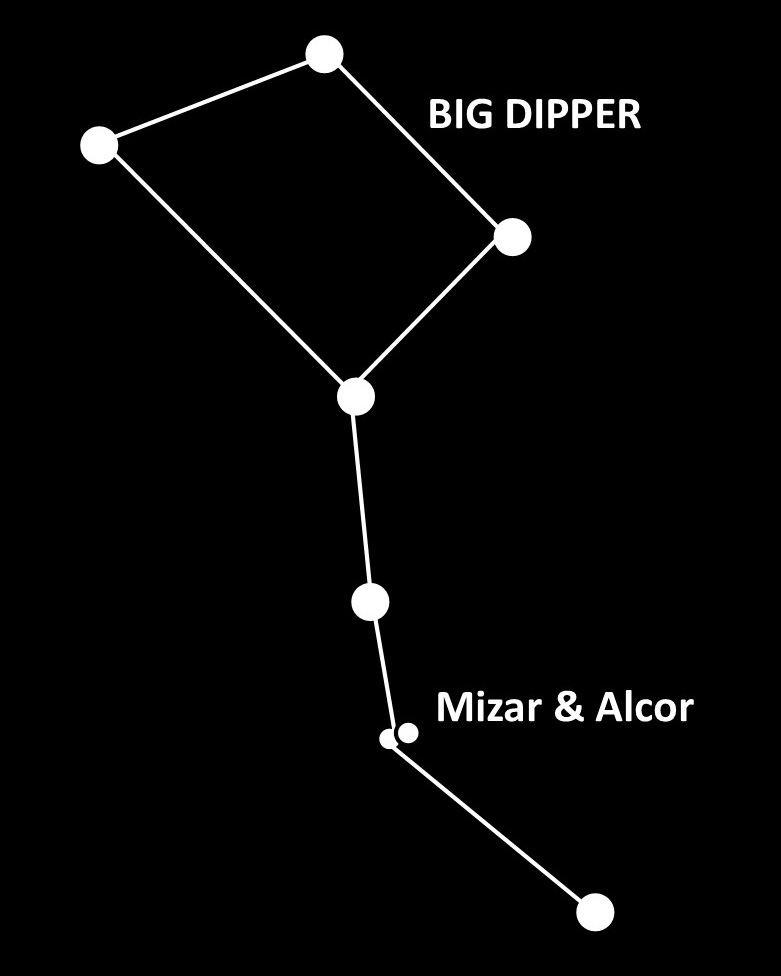
Look very closely at the second star towards the end of the Big Dipper’s handle. If you have stellar eyesight you may be able to see why this object is considered one of the sky’s best tests for vision. That “object” is actually a few stars clustered together. Often referred to generally as a “Double Star” (it looks like two with the naked eye) Mizar and Alcor each have their own bound companion stars that you can view with a powerful set of binoculars or a basic telescope.
A STAR “NURSERY”
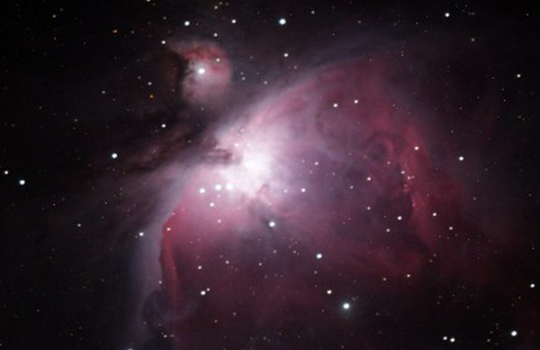
Residing in what’s likely the most identifiable constellation in the night sky is also one of the most commonly viewed objects during any amateur skywatching event. Just below Orion’s belt you will see three stars referred to as his dagger. That middle “star” is actually a nebula, a cloud of dust and gas where stars and early planets form.
Photo credit: "Orion-nebula" by cmckdub is licensed under CC PDM 1.0