
Who's on the Trail: the Critter Edition
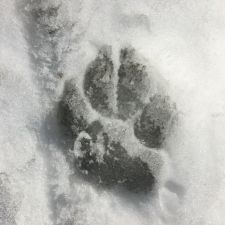
Winter is a special time of year when you get a sneak peek of what happens in the woods when you’re not around. Snow reveals the usually invisible comings and goings of animals. Learning to identify tracks makes it all the more fun to go adventure out on a greenway or at a park on the day after a snowfall.
Before you head out, it's good to keep in mind the condition of the snow. Deep, dry, powdery snow will create less clearly defined prints, while shallow, wet snow will create more defined, easily identifiable tracks. Think, too, about if there has been a big melt recently, as it can highly distort or expand animal tracks.
 Graphic Credit: NY State Parks Blog
Let's Get Sleuthing
Once you get out there, two main factors will help you identify tracks: the shape of the print and their pattern. which indicates gait (how the animal moves). Clues to look for when analyzing shape include size of the print, number and position of toes, whether claws are retracted or not, and size and shape differences between front and back feet.
The pattern of the tracks, in turn, will give you clues as to how the animal moves. For example, some animals, like cats, have a direct register when they walk, meaning that the hind foot lands in exactly the same spot as the front foot, leaving only one print. In contrast, other animals, like those in the dog family (foxes are exceptions to this canine rule) register indirectly, meaning the hind foot slightly oversteps the front. As another example, you’ll know tracks belong to a running rodent like a squirrel when the hind feet prints (the longer ones) appear just in front and to the sides of the front prints.
Let’s look at some commonly seen tracks and put these skills into practice.
House Cat, Domestic Dog or Coyote?
You’ll know a track belongs to a member of the cat or dog family by first looking at the shape. Both cats and dogs have four toes showing on the back and front prints. If you look closer though, you’ll see that the bottom of the plantar pad (sole of the foot) will show three lobes for cats, as opposed to one lobe for dogs. You also won’t see claw marks on cat tracks because they walk with their claws retracted, as opposed to dogs that often (but not always), leave marks from their exposed nails.
You can also use the pattern of the tracks to look at whether there’s just one set of prints, indicating direct register, and therefore a cat, or whether the back print overlaps the front with each step, indicating the indirect register of a dog.
When it comes to differentiating between domestic dogs and coyotes, the former’s prints are usually rounder, less symmetrical, and with blunter nails, and the pattern often meanders. Coyotes, however, move with purpose most often in a straight line.

Rabbit or Squirrel?
The tracks left behind by these critters can appear similar in the snow, but there are a few key ways to tell them apart. First of all, pay attention to where the tracks are going! Do they lead up a tree? Probably a squirrel. Do they end in a hole in an open area? More likely a rabbit.
In terms of shape, rabbits’ back feet leave two elongated prints, while their front paws leave smaller circles. The paws are all covered in fur, so you won’t see distinct toes. When we look at the pattern, rabbits leave a stretched out rectangular shape between the four paw prints, with the front feet often diagonal to each other. When they hop or bound, they push off their back feet, place their front paws, and then land with their back feet ahead of the front.
In contrast, let’s look at squirrels. Squirrels do not have fur covering their feet, so you will often be able to see distinct toes - five on the back feet and four on the front. When squirrels move, they land with their back feet ahead of their front just like rabbits, but the group forms more of a condensed square shape or horizontal line.

Leave it to Beaver?
These semi-aquatic rodents leave some of the most distinctive evidence of their presence during the winter months.
 Tracks from their webbed hind feet embedded within the trough formed by their low body dragging along is hard to miss. You can easily spot beaver activity along many of the towpath trails beside the older sections of New York’s canal system. Simply look along the water's edge and you will spot “beach” areas of muddy snow packed down from their multiple trips going in and out of the water. Most likely there will be nearby evidence of wood chips at the base of a tree indicating their dam and lodge building work does not cease during winter.
Photo Credit: "Beaver Tracks" by oliva732000 is licensed under CC BY-SA 2.0
Sources and for more info: