
Trails are Vital to our State Historic Sites

The term “historic site” generally conjures up an image of an old building or structure through which visitors will be led by a docent who may loosely recite from a script. Some locations may provide interpretive panels for self-tours or a curated museum-type setup in their visitors center. However, many historic sites, particularly those in the New York State park system, rely on another engaging means to reveal the stories of the place: trails.
Trails and the grounds of our state historic sites often get overlooked, especially when there is an authentic Georgian-style 18th century structure to tour and there is an opportunity to stand in the exact room where a Founding Father shared his wedding vows. But many sites rely on surrounding pathways and trail systems to tell their complete stories, and for some a trail is intrinsic to the total experience.
OLD ERIE CANAL STATE HISTORIC PARK
One of the several linear parks in the New York State park system, the 36-mile trail plays an important role in the history of the region. It is designated by the National Park Service as a National Recreation Trail and the story the Erie Canal cannot be truly understood without walking or cycling along the towpath which parallels the original alignment of the "The Eighth Wonder of the World." Although the many interpretive panels dotting the trail will piece together the story, to get the full picture visitors should make a stop at Chittenango Landing Canal Boat Museum, located along the linear park. where the 19th century comes to life amidst period buildings, blacksmiths, ruins from the original canal structures, and more.
FORT MONTGOMERY
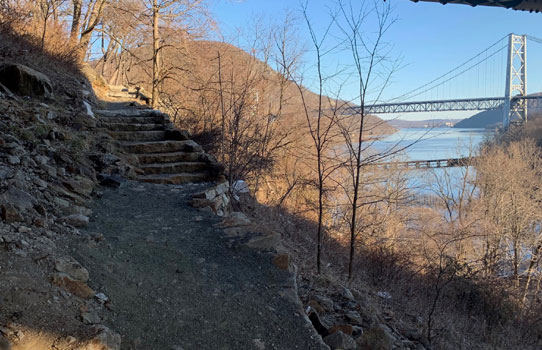
Unlike many historic sites that have a key structure to tell their story, Fort Montgomery State Historic Site, located on the western shore of the Hudson River just north of Bear Mountain, is heavily dependent upon its network of trails to relay its Revolutionary War role. The battleground and archaeological remains of the fort are only accessible via the trail system, necessitating significant trail maintenance to provide safe access for as wide an audience as possible. Clear markings are essential to keep patrons on the defined paths so as not to disturb the fragile landscape of artifacts and nature.
The Fort Montgomery Battle Site Association (a non-profit organization that partners with the Office of Parks, Recreation, and Historic Preservation to “promote the preservation, public recognition, and appropriate planned accessibility of/to the Fort Montgomery Historic Site and the surrounding trails”) was awarded a Stewardship and Public Access Capacity grant through Parks & Trails New York's Park and Trail Partnership Grant program in 2018 to fund the complete rehabilitation of the trail system at Fort Montgomery. The trail system is now significantly more accessible for visitors with limited mobility, young children, and large groups. The erosion control measures will prevent artifacts from being washed out and potentially lost.
EASTERN OVERLOOK AT GRANT COTTAGE
No trip to this remarkable historic site would be complete without a short walk down the Eastern Overlook path. The path ends at the famous spot where revered Civil War hero and eighteenth president Ulysses S. Grant took his last view of the valley just days before his death in the Cottage atop the hill. “Grant’s Last View” presents a jaw- dropping vista, with views of the Adirondacks to the north, the Green Mountains to the east, and the Catskills to the south. The trail is an essential component of the historic site story. Grant was pushed via a bath wagon (a 19th century rickshaw-type device, a version of which can be viewed at the visitor center) in the shadow of the hotel that once shared the grounds with the Cottage. Walking the trail and the grounds helps visitors piece together the fascinating story of Grant's time at the Cottage.
SACKETS HARBOR BATTLEFIELD
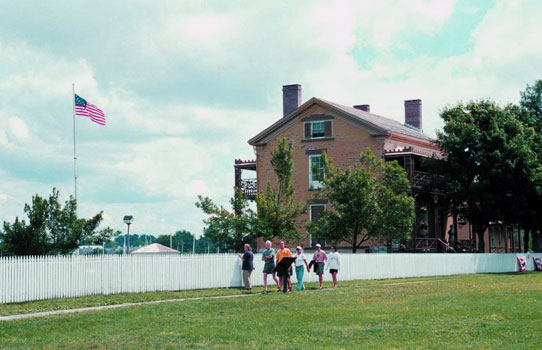
Sackets Harbor, one of New York’s most northerly state historic sites, proudly features a trail that was awarded National Recreation Trail status by the National Park Service in 2015. The History Trail at Sackets Harbor Battlefield State Historic Site War of 1812 battlegrounds is essential for conveying the multi-faceted story, especially when the main buildings are closed after hours. From dawn to dusk, year-round, visitors can stroll along the trail and read the ten interpretive panels that interweave the battle with other historic features such as the former farmstead and restored 1850s Navy Yard. From May to November, curious history enthusiasts can also wander about while listening to the On-Cell Audio Tour to enhance their experience. A remarkable aspect of the History Trail (just shy of one mile) is that it links to a six-mile village trail that loops through various landscapes, including a military cemetery where 1812 militia members are buried as well as numerous interesting landmarks in the community.
According to Connie Barone, Site Manager, there are future trail-building opportunities for this intriguing lakeside historic site. Horse Island, offshore less than a mile southwest of the main battlegrounds, has the potential for a small network of trails that will provide visitors with an additional experience. The site is hoping to make this additional trail network a reality in the upcoming years.
Read more about the History Trail and its recognition by the National Park Service in this Fall 2018 American Trails article.
OLD CROTON AQUEDUCT
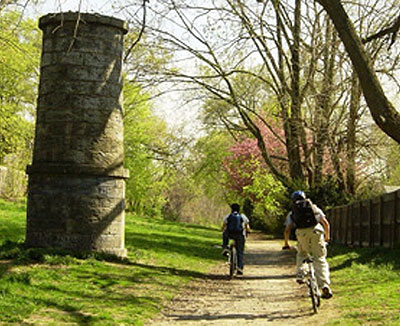
The historical contextof the Old Croton Aqueduct is complemented by the trail atop the structure and is essential to grasp its story. The 41-mile aqueduct was built in the first half of the 19th century to supply the significantly growing population of New York City with fresh water from the north.
According to the description on the Friends of the Old Croton Aqueduct website, “In 1968, New York State purchased from NYC the land and structure that constituted the Weschester County section of the Old Croton Aqueduct, between Croton Gorge Park and the Yonkers-New York City line. This 26.2-mile portion of the 41-mile Aqueduct route became the Old Croton Aqueduct State Historic Park, a recreational and cultural resource that appeals to a wide range of visitors. Tree-lined and grassy, traversing local villages and varied landscapes, the trail offers the pleasures of nature and glimpses of historic and architectural treasures along the way. Twenty-two miles are a designated part of the Hudson River Valley Greenway Trail, and sections are being incorporated into Westchester County's RiverWalk.”
Before venturing out on foot or on two wheels, visitors can stop at the Keepers House (visitor center), do a self-guided walk, or take the challenge by getting recognized for completing a 26- or 41-mile walk through this wonder of architecture.